










Following Scottish National Apprenticeship Week, CR Smith Chairman, Gerard Eadie CBE, shares his perspective on why apprenticeships remain vital to Scotland’s future workforce, and why skilled, hands-on trades may be one of the most secure long-term career choices a Scot can make.
Every year, Scottish National Apprenticeship Week rightly shines a light on the many benefits of apprenticeships. I’m often asked for my view, and the answer is usually familiar – learning a trade, earning while you learn, developing practical skills and building a career without taking on life-changing debt.
But in 2026, there is a bigger – and more pressing – point to put across. In the age of artificial intelligence, an apprenticeship may be one of the most secure long-term career choices a Scot can make.
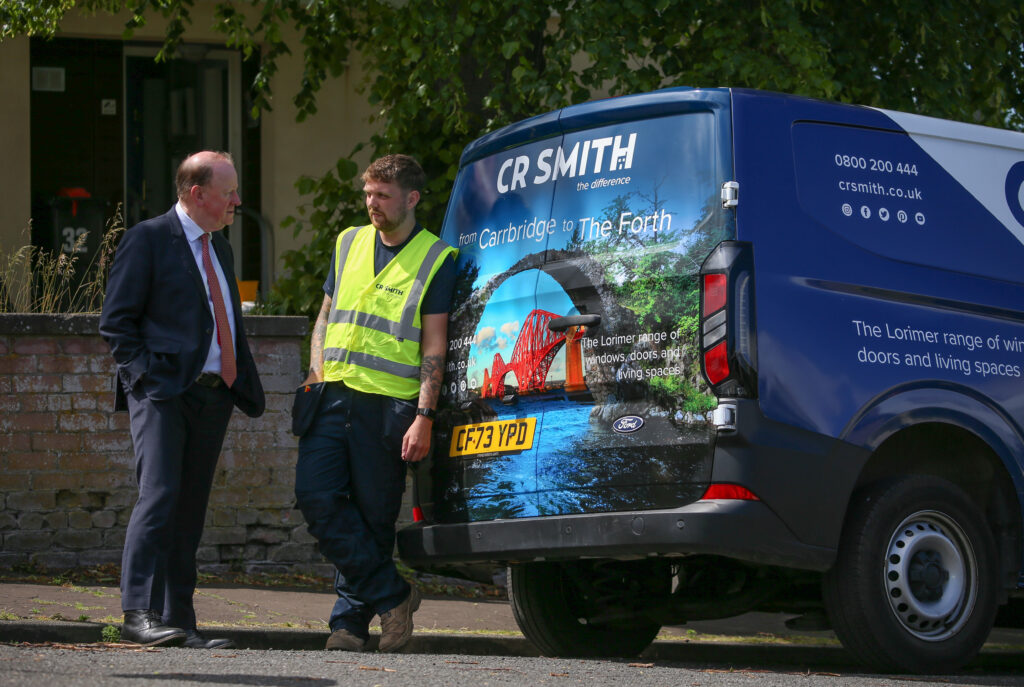
I’ve been in business long enough to know ‘never say never’, so I’ll stop short of saying AI will never fit a window – but I’m confident we won’t see it become the norm in our lifetime. AI can’t turn up at someone’s home, remove old windows, work around a lived-in space, solve unexpected problems on site, and install a precision-engineered product to exacting standards while reassuring a customer and representing a brand.
What’s more, it can’t greet a customer at the door with a warm smile, discuss their requirements in a friendly and professional manner, and leave them wanting to use your services again in the future – and tell all their friends too.
That is why skilled trades – and the apprenticeships that underpin them – are more future-proof than ever. As technology accelerates, the value of practical, human, location-specific skills will only increase. Tradespeople are not insulated from change, but they are far less exposed to displacement. Skills, judgement, adaptability and professionalism remain irreplaceable.
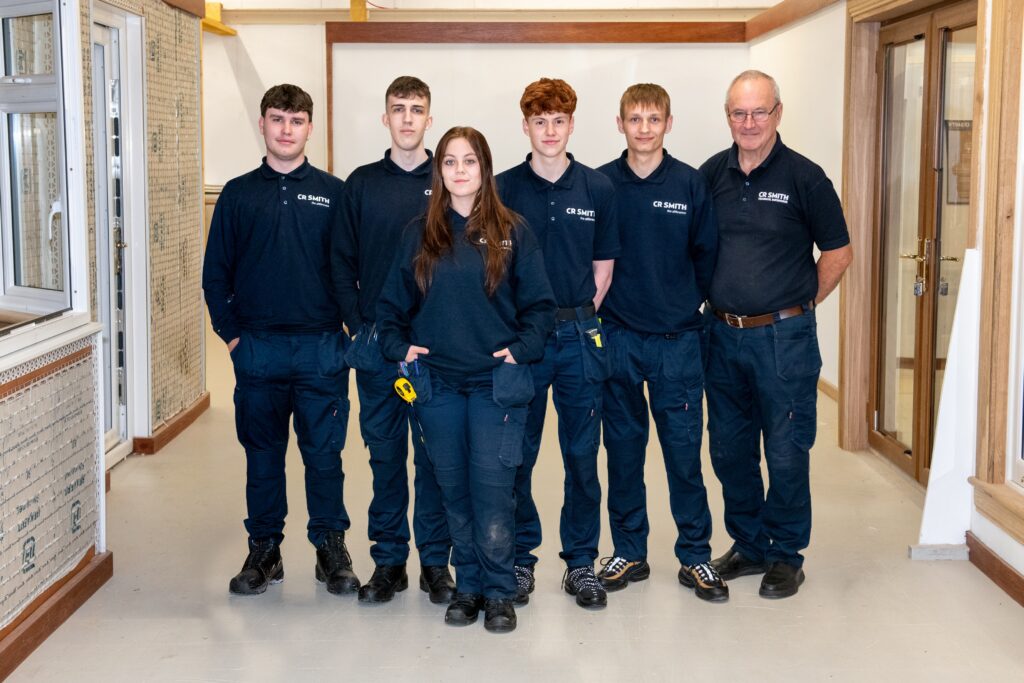
These principles aren’t new, but their value is as significant as ever. We have more than 40 people currently working at CR Smith who began their careers as apprentices, many of whom now hold senior, specialist or leadership roles. They are spread across the country – from Inverness and Aberdeen to the Central Belt – and they are fundamental to the success of the organisation.
Employers that get this right will look to partner with colleges, supporting students who are already undertaking joinery training, offering part-time work, mentoring and a pathway into full apprenticeships. They’ll focus on attitude and potential, knowing that technical excellence can be taught when the foundations are right. Apprentices will work towards recognised qualifications, combining structured learning with real-world experience on site.
Crucially, they must invest in how apprentices learn. Alongside a long-standing partnership with Fife College, we have also built our own training academy and workshop facilities, continuously evolving how apprenticeships work in practice. Evening study, hands-on mentoring, on-site problem-solving and customer-facing experience are all part of the mix. Joinery skill alone is not enough; professionalism, communication and pride in workmanship matter just as much.
That same approach runs through how we train apprentices day to day. Technical ability is essential, but being a good joiner or tradesperson is not only about practical skills. Clear communication is a vital skill, enabling apprentices to manage expectations, build trust and deliver a positive experience for customers from start to finish.
There’s another misconception that will be challenged by apprenticeships’ rising capital – the perception they are only for school leavers at 16. That simply isn’t true. We have welcomed apprentices in their mid-20s and beyond, including people changing careers from sectors such as hospitality, where transferable skills like strong communication, reliability, teamwork and customer service are invaluable. With the right support, apprenticeships can offer a second – or third – chance at a sustainable career.
This matters because Scotland faces a very real skills shortage. As older generations of tradespeople retire, we risk losing decades of expertise unless we replace it with structured, high-quality training. That requires serious collaboration between business, schools, colleges and government. Apprenticeships must be treated not as a fallback, but as a strategic investment in the economy.
Government has a critical role to play – not just in funding, but in aligning education with the needs of industry, reducing bureaucracy and promoting apprenticeships as a first-choice route rather than an alternative. Employers, for their part, must commit properly – investing time, facilities and long-term opportunity, not simply ticking a box.
We’ve seen what works, building careers, retaining talent and strengthening our business by putting apprenticeships at the heart of what we do. In an era where technology is rewriting the rules of work, that approach feels essential.
AI will continue to advance, and some careers will change beyond recognition – with some disappearing altogether – but skilled trades, grounded in human expertise and real-world problem-solving, will endure.
For young people weighing up their options, and for policymakers shaping Scotland’s future workforce, the message is clear – in a rapidly evolving age, learning a trade may be one of the most secure decisions any person can make. And that is something worth investing in.
Gerard Eadie CBE is the founder and Chairman of CR Smith, Scotland’s leading uPVC window manufacturer and home improvement installer.